




24 Mar From Simple Crowns to Glittering Jewels: The Evolution of English Coronation Regalia
With the coronation of King Charles III looming, we thought it would be great to dive into the history of a key feature of this event: the crown!
English coronations have always been an opulent affair, with ornate crowns and regalia being used to signify the monarch’s power and authority. From medieval times to the present day, the English crown jewels have been a symbol of the nation’s heritage, a testament to the skill and artistry of generations of craftsmen, and a reminder of the power and prestige of the monarchy. Today, let’s take a journey through the last thousand years of English coronations, and explore the crowns and jewels that have played such an important role in the nation’s history.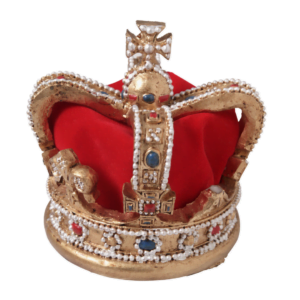
Pre-1066
The earliest recorded English coronation took place in 973, when King Edgar was crowned at Bath. While we have no records of the crown used at this ceremony, we do know that by the time of the Norman Conquest in 1066, the English monarchy possessed a range of regalia, including crowns, sceptres, and orbs. However, these early crowns were relatively simple affairs, made from precious metals and adorned with pearls, gemstones, and enamelwork.
Upping the Ante in the 12th Century
It was not until the 12th century that the English monarchy began to use crowns that were truly fit for a king. The crown used at the coronation of Henry II in 1154 was a magnificent piece, set with rubies, sapphires, emeralds, and pearls. This crown was replaced in the 13th century by another crown which was even more elaborate, featuring a large sapphire and a variety of precious stones.
The English crown jewels were further enhanced during the reign of Edward III (1327-1377), who had a new crown made for his queen, Philippa of Hainault. This crown, which is now known as the “Queen Mother’s Crown,” is one of the oldest surviving pieces of English regalia, and is notable for its elegant, understated design.
The Extravagances of the 16th Century
The next major development in English coronation regalia came in the 16th century, during the reign of Henry VIII. Henry was famously extravagant, and his coronation regalia reflected his love of ostentation. The crown that he commissioned for his own coronation in 1509 was adorned with a staggering 3440 diamonds, as well as pearls, rubies, emeralds, and sapphires.
Shifting Religious Emphasis
The crowns used at English coronations continued to evolve throughout the Tudor period. Elizabeth I’s crown, which was made for her coronation in 1559, was notable for its lack of a cross, reflecting Elizabeth’s Protestant faith. This crown was later altered by James I in 1603, who added a cross to the top of the crown to reflect his own Catholic faith.
The Imperial Era
The English monarchy continued to use crowns and regalia in the centuries that followed, with each coronation bringing new additions and alterations to the collection. One of the most famous pieces in the English crown jewels is the Imperial State Crown, which was made for Queen Victoria’s coronation in 1838. This crown is a true masterpiece of Victorian craftsmanship, featuring 2,868 diamonds, 17 sapphires, 11 emeralds, and countless other precious stones.
A Step Back in Time
The Imperial State Crown has been used in every English coronation since Victoria’s, and it is perhaps the most iconic piece of English regalia. However, it is not the only crown used in English coronations. The St. Edward’s Crown, which dates back to the 12th century, is the oldest surviving crown in the English regalia, and is used only for the actual moment of coronation.
Alternative Occasions
Other crowns used in English coronations include the Prince of Wales’s coronet, which was made for the investiture of Prince Charles in 1969, and the George IV State Diadem, which is worn by the monarch during the procession to Westminster Abbey. These crowns and jewels all have their own unique histories and significance, and each one contributes to the rich tapestry of English coronation regalia.
Rough Times
Of course, the English crown jewels have not always had an easy time of it. In 1216, during the reign of King John, the crown jewels were lost when the king’s baggage train was swept away by the tide in the Wash estuary. The jewels were eventually recovered, but this was just one of many challenges faced by the English crown jewels over the centuries.
During the English Civil War in the 17th century, the crown jewels were seized by the forces of Oliver Cromwell, and many pieces were melted down or sold off. However, after the Restoration in 1660, Charles II was able to reclaim many of the lost pieces, and the English crown jewels once again became a symbol of the monarchy’s power and prestige.
The Crown Jewels Today
Today, the English crown jewels are housed in the Jewel House at the Tower of London, where they are on public display for visitors to marvel at. The collection includes not just crowns and regalia, but also ceremonial swords, sceptres, and orbs, as well as the famous Cullinan Diamond, which was discovered in South Africa in 1905 and is now part of the Sovereign’s Sceptre with Cross.
The English crown jewels are more than just a collection of glittering baubles, though, they are a testament to the history and heritage of the English monarchy, and a reminder of the power and prestige of the nation itself. From the simple crowns of the early medieval period to the opulent Imperial State Crown of today, each piece in the collection has its own unique story to tell.
As we look back over the last thousand years of English coronations, it is clear that the English crown jewels have played a vital role in the nation’s history. Whether they are viewed as symbols of divine right or simply as beautiful works of art, they have always been an important part of the pageantry and spectacle of English coronations, and will no doubt continue to be so for centuries to come.
The Coronation Crown
King Charles III’s coronation in May will see the historic St Edward’s Crown take centre stage once again, as it has for more than 350 years of English coronations. The crown, a prominent piece of the Crown Jewels on display at the Tower of London, has been used since King Charles II’s coronation in 1661, following the monarchy’s restoration after Oliver Cromwell’s republic.
This medieval-inspired crown replaced its predecessor, which dated back to the reign of Edward the Confessor and was melted down in 1649. The solid gold frame of St Edward’s Crown is adorned with rubies, amethysts, sapphires, garnet, topazes, and tourmalines, with four crosses-pattée and four fleurs-de-lis, as well as a velvet cap and ermine band. King Charles III will be crowned with St Edward’s Crown during his coronation ceremony at Westminster Abbey, just as his mother, Queen Elizabeth II, was in 1953. He will also wear the opulent Imperial State Crown during the service.