



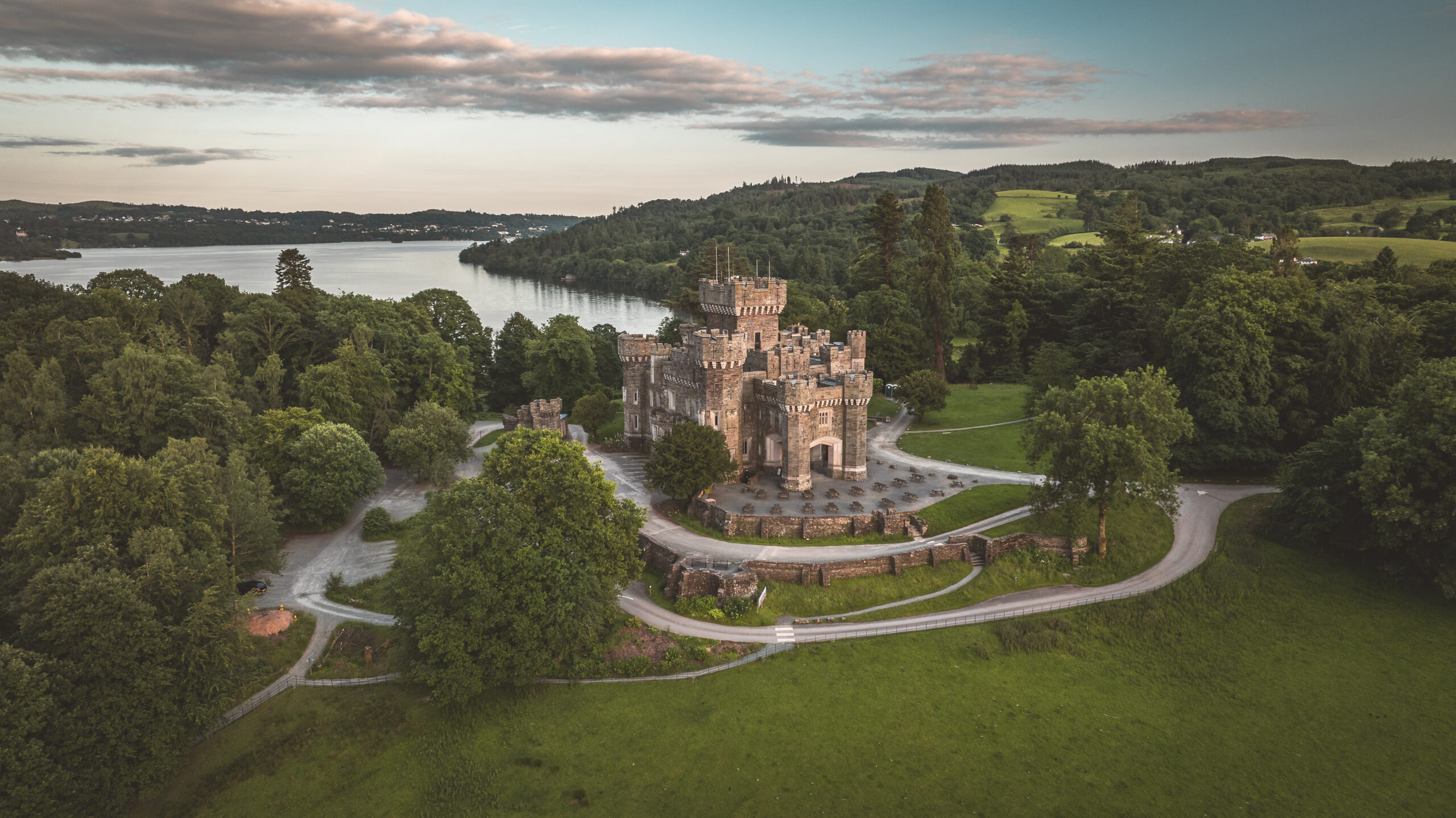
06 Oct Haunted Halls: The Ghostly Secrets of Britain’s Historic Estates
Britain has no shortage of historic houses. Give a grand estate a few hundred years of history, a winding staircase, a portrait or two with unsettling eyes and perhaps a tragic tale lurking somewhere in the family archives, and it is hardly surprising that the occasional ghost story follows.
From stately homes to ancient castles, some of Britain’s most beautiful estates are also said to be its most haunted. Apparitions appear in corridors, footsteps echo through empty rooms, and unexplained noises have become part of the folklore surrounding houses that have witnessed centuries of births, deaths, celebrations, and intrigue.
Whether you believe in ghosts or regard them as simply persistent pieces of storytelling, you cannot deny that these legends add another layer to Britain’s historic landscape.
Here are a few of Britain’s most intriguing, haunted halls.
The Grey Lady of Blickling Hall
Few historic houses have a ghost story quite as evocative as that of Blickling Hall in Norfolk.
The Jacobean house is famously associated with Anne Boleyn, who was born at the earlier Blickling estate around the turn of the sixteenth century. According to tradition, her ghost is said to return to the house each year on the anniversary of her execution.
The story is suitably dramatic.
On the night of 19 May, it is said that a spectral coach approaches the house, drawn by horses and carrying Anne herself. Some versions of the legend describe her holding her own severed head.
It is precisely the sort of tale that seems almost too theatrical to be true… which, naturally, makes it rather difficult to resist.
The Grey Lady of Glamis Castle
Further north, Glamis Castle in Scotland has accumulated generations of stories about mysterious inhabitants.
Perhaps its most famous is the Grey Lady, said to haunt the castle’s chapel. She is traditionally identified with Lady Janet Douglas, who was executed for witchcraft in 1537 after becoming caught up in the political intrigues surrounding the court of James V.
The historical circumstances are considerably more complicated than the legend suggests, but the association has endured.
Glamis is also surrounded by other tales of secret rooms, mysterious figures, and unexplained happenings. Whether these stories originated in genuine encounters, centuries of embellishment or simply the fertile imagination that historic buildings tend to inspire, they have become part of the castle’s identity.
And perhaps that is the real magic of a place like Glamis. Its history is so rich that fact and folklore almost seem destined to mingle.
The Ghosts of Hampton Court Palace
If walls could talk, Hampton Court Palace would have rather a lot to say.
Few buildings in Britain are more closely associated with dramatic royal history. Built for Cardinal Wolsey and later transformed by Henry VIII, the palace has witnessed marriages, executions, political manoeuvring, and royal intrigue on a remarkable scale.
It is therefore perhaps unsurprising that it has acquired a reputation for paranormal activity.
One of its most famous alleged apparitions is Catherine Howard, Henry VIII’s fifth wife. According to legend, her ghost has been seen running along the Haunted Gallery towards the chapel, crying out for mercy after her imprisonment.
Visitors and staff have also reported unexplained sounds and sightings elsewhere in the palace.
Whether supernatural or not, the stories add a particular atmosphere to a building where some of Britain’s most dramatic history genuinely unfolded.
The Ghostly Tales of Berry Pomeroy Castle
For something altogether darker, Devon’s Berry Pomeroy Castle provides one of Britain’s most atmospheric ghost stories.
The ruined castle is associated with several apparitions, including the so-called White Lady and Blue Lady. According to local folklore, both are connected with tragic stories of the Pomeroy family.
The Blue Lady is said to appear at a high window and is sometimes associated with the death of a child. The White Lady, meanwhile, has been linked in different versions of the story with a woman named Margaret Pomeroy and a particularly grim family tragedy.
As with many historic ghost stories, separating documented history from later folklore is difficult. But perhaps that is part of their appeal. A ruined medieval castle, overgrown stonework and centuries of stories require remarkably little embellishment to become atmospheric.
Why Are We Still Fascinated?
There is something curious about Britain’s obsession with haunted houses.
We are perfectly capable of enjoying modern entertainment designed to frighten us – horror films, escape rooms, Halloween attractions – yet a ghost story attached to a genuine historic building feels different.
Perhaps it is because the setting is real.
These are not invented castles created for a film. Their staircases, chapels, bedrooms, and gardens have existed for generations. People really did live, love, quarrel, and die there. A ghost story gives those histories another dimension. And the older the building, the more layers there are to uncover.
When History Becomes Legend
For today’s owners and visitors, the fascination of these estates isn’t necessarily whether every apparition can be explained. It is the fact that the stories have survived.
A house becomes more than bricks and stone when generations attach memories, traditions, and legends to it. Folklore becomes part of its identity. A whispered story passed from one generation to the next can become almost as enduring as the architecture itself.
This is perhaps one reason Britain’s historic titles and manorial heritage continue to hold such appeal. They connect people not simply with an object or an ornament, but with a sense of place and continuity.
A manorial title offers its own link to Britain’s historic landscape; a distinction rooted in the country’s centuries-old manorial heritage and one that can be passed on to future generations.
If you’re intrigued by the stories, traditions and enduring character of Britain’s historic past, exploring available manorial titles offers a great way to connect with that living heritage.
The Stories We Choose to Keep
Perhaps the most fascinating thing about Britain’s haunted halls isn’t whether the ghosts are real.
It is why we continue to tell their stories.
Every generation adds something: a new sighting, a family anecdote, a visitor’s strange experience. The tale changes slightly, but the essence remains. And so the history of a house becomes layered with something more mysterious; an atmosphere created as much by memory and imagination as by stone and timber.
That may be the true secret of Britain’s historic estates. They don’t simply preserve the past. They allow us to keep telling it.
And, on an October evening, with the wind rattling the windows and the last light disappearing across the grounds, perhaps that is quite enough to make anyone wonder what might still be walking those corridors after dark.
If you’re inspired by Britain’s love of heritage with backstories, explore our collection of available manorial titles and see which titles offer a story that connects with you.