



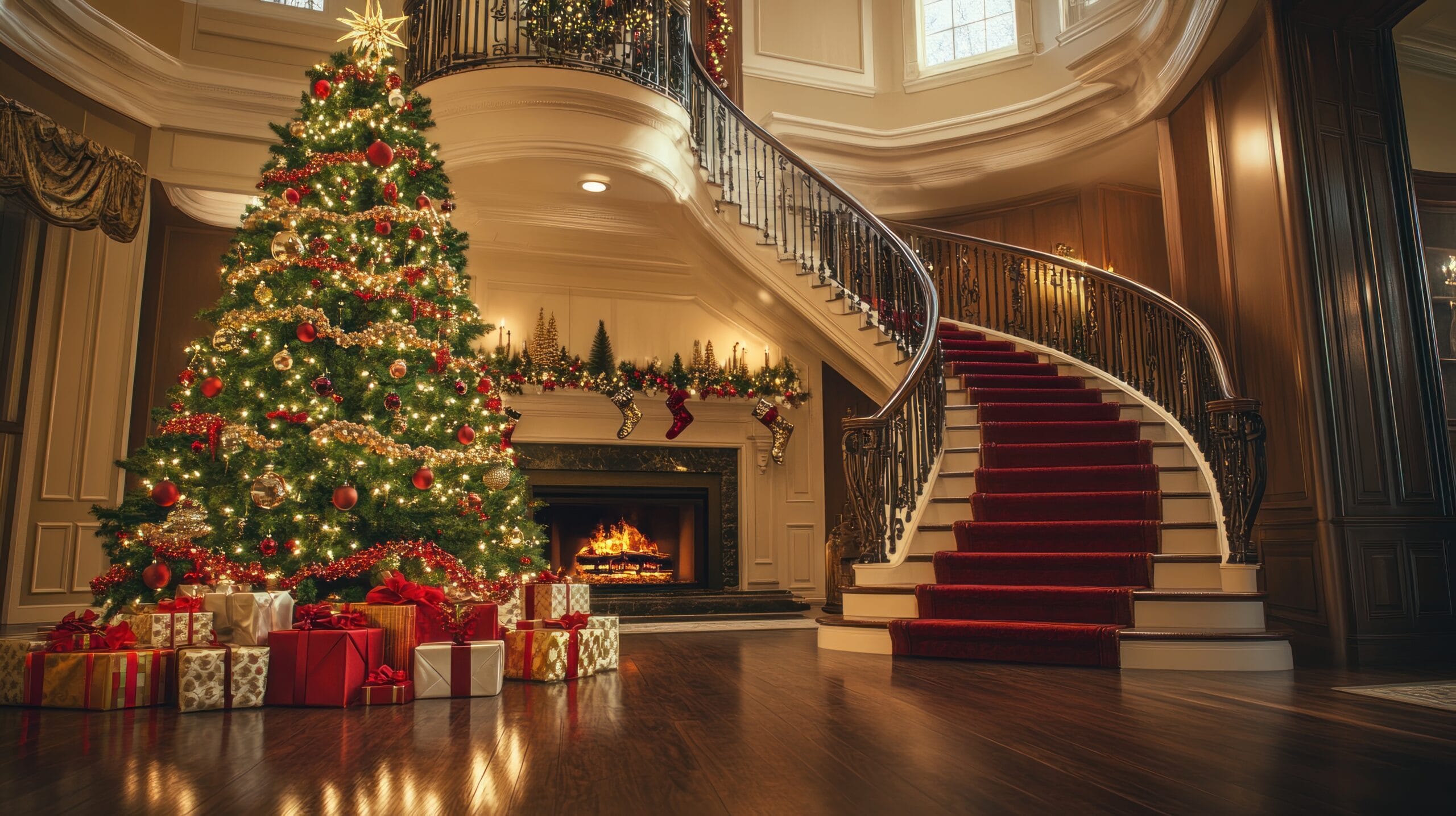
05 Dec How Britain’s Grand Houses Decorate for Christmas — And How You Can Emulate that Look!
December has always been the month when Britain’s stateliest homes come into their own. As evenings draw in and frost laces the hedgerows, the great houses of the country transform into scenes of warm, glowing splendour.
But unlike the glittering commercial displays of the modern high street, Christmas on a historic estate has always been rooted in tradition: evergreen foliage gathered from the land, firelight softening vast rooms, and a sense that the house itself is participating in a ritual as old as the family line.
Today, these displays still captivate visitors — from the candlelit halls of Chatsworth to the understated Georgian elegance of Holkham Hall. But the true charm lies not in extravagance, but in the thoughtful layers of heritage, symbolism and restraint. And, encouragingly, much of this aesthetic can be meaningfully recreated in your home if you’re keen a touch of quiet heritage to the festive season.
Here’s how Britain’s grand houses decorate for Christmas, and how you too can emulate the look with grace and authenticity.
1. Winter Greens: The Time-Honoured Foundation
In a historic estate, Christmas begins not with tinsel but with greenery. Holly, ivy, yew, bay, pine, rosemary; all foraged or cut from the surrounding land.
Before the Victorians popularised the idea of a Christmas tree, great houses were already draping staircases, mantelpieces and doorways with evergreen boughs, symbolising prosperity, protection and continuity.
How you can emulate it
Keep it natural. Choose fresh foliage over artificial garlands, mixing textures and shades of green. Let pieces fall loosely rather than forcing symmetry; estate decorators rarely seek perfection; they aim for abundance and warmth. A single sprig of holly on a table napkin or a wreath made from foraged branches has far more quiet charm than anything mass-produced.
2. Fireside Warmth: The Glow That Makes a Home Feel Storied
Great houses have traditionally relied on roaring hearth fires to set the tone for the season. Firelight creates warmth, movement, and a sense of gathering. Rooms are arranged so that guests naturally flow towards a lit hearth; a tradition that has survived centuries.
How you can emulate it
If you have a fireplace, let it be the heart of the room. Even if you don’t have one, though, candle clusters, lanterns, or warm-toned lamps can replicate that soft historic glow. Avoid overhead lighting whenever possible; it breaks the enchantment. Think “gentle amber”, not “bright winter white”.
3. The Estate Christmas Tree: A Victorian Arrival with Noble Flair
Although evergreen decorations stretch back far earlier, the Christmas tree as we know it only became fashionable due to Queen Victoria and Prince Albert in the mid-19th century. Great houses adopted them with enthusiasm — but with a distinctly noble restraint.
Trees were often decorated with:
- Simple glass baubles
- Ribbons in colours tied to the estate’s heraldry
- Dried fruits
- Handcrafted ornaments
- Candles (thankfully replaced today with safer alternatives)
How you can emulate it
Choose a real tree if possible, dress it sparingly, and let it breathe. Pick a palette and keep to it; rich reds, deep greens, silver touches, midnight blues. Avoid overloading branches. Estate trees are elegant, not cluttered. Let your decorations feel meaningful rather than excessive.
4. Natural Materials: Texture Rooted in the Land
In historic houses, the beauty of Christmas décor came from what the estate already offered and still does. Of course, not everything can be grown locally. So, different woods, berries, cones, apples, oranges, cinnamon sticks, and dried seedheads are all used to bring texture and scent into the home.
How you can emulate it
Choose decorations made of wood, linen, glass, paper, wool, or metal. Add bowls of winter fruit, baskets of pinecones, or simple posies of winter herbs. It’s more “heritage countryside” than “department-store Christmas”.
5. The Heritage Tablescape: Feasting with Meaning, Not Excess
Christmas feasts in grand houses were elaborate but always carried ritual and symbolism. Still now, silver is polished, linens pressed, and seasonal greenery laid down the length of long tables. A centrepiece is never about height; it’s about continuity.
How you can emulate it
Try a linen runner, simple candles, and foliage woven loosely along the centre. Use mismatched crockery if it carries personal history. Add handwritten place cards or a single winter sprig at each setting. This is a table designed for belonging.
6. Scent & Sound: The Hidden Elegance of Atmosphere
Historic homes come alive through multi-sensory cues; burning logs, spiced pomanders, bay leaves warming near a stove, the echo of carols drifting down stone corridors.
How you can emulate it
Choose scents with history: clove, orange, pine, cedar, frankincense. Play softly traditional carols, harp, or instrumental arrangements. Think less “soundtrack”, more “seasonal hush”.
A Touch of Heritage: Subtle Symbols of Continuity
Christmas in a grand house is not merely decorative — it is generational. A mantlepiece garland or a tree ornament might be placed in the same spot every year, creating a sense of lineage and identity.
And this is where you too can find a deeper connection with British heritage. You don’t need to own an estate to appreciate the values that shaped these traditions; care, continuity, ancestry, and the quiet confidence of belonging to something older than the present moment.
If you’re drawn to this world, even modest touches can carry that feeling of rootedness. Some choose to deepen that connection by exploring the history and titles associated with Britain’s rural manors; the perfect way to embrace heritage in a symbolic, meaningful, and entirely modern way.
Bring Historic Elegance into a Your Christmas
What sets Christmas in Britain’s grand houses apart is not extravagance but intentionality. Every bough, every candle, every ribbon nods to a lineage of tradition; a reminder that when winter arrives, the role of a home is to gather people in and honour what binds them together.
And if embracing history appeals to you — whether through decoration, celebration, or exploring the possibility of holding a manorial title — this is THE season that offers a fitting moment to weave a little tradition into your life.
Please do explore our available manorial titles if you’d like to find out more.