



07 May The History of British Polo: Sport, Society and Subtle Distinction
There are few sports more closely associated with quiet prestige than polo. It is not loud in the way of stadium games, nor widely accessible in the manner of village cricket. Instead, it occupies a more nuanced space, one shaped by heritage, horsemanship, and a distinctly understated sense of social awareness.
Often described as “the sport of kings”, polo’s British story is not one of invention, but of adoption, refinement, and enduring cultural influence. And, much like the traditions that surround it, its appeal has never been rooted in spectacle alone… but in what it represents.
From Empire to English Fields
Polo arrived in Britain during the 19th century, carried back by officers of the British Army who had encountered the game in India. The first recorded match on English soil took place in 1869, and the sport quickly found favour among cavalry regiments and aristocratic circles alike.
It is easy to see why.
Polo demands skill, discipline, and an instinctive understanding between rider and horse; qualities prized within elite equestrian culture. It also lends itself naturally to social ritual: matches become occasions, not merely competitions.
By the late Victorian period, polo had firmly established itself within Britain’s upper echelons, with clubs forming around London and in the countryside. Among the most notable was Hurlingham Club, whose rules helped standardise the modern game and whose grounds became synonymous with refined sporting life.
A Game of Precision and Perception
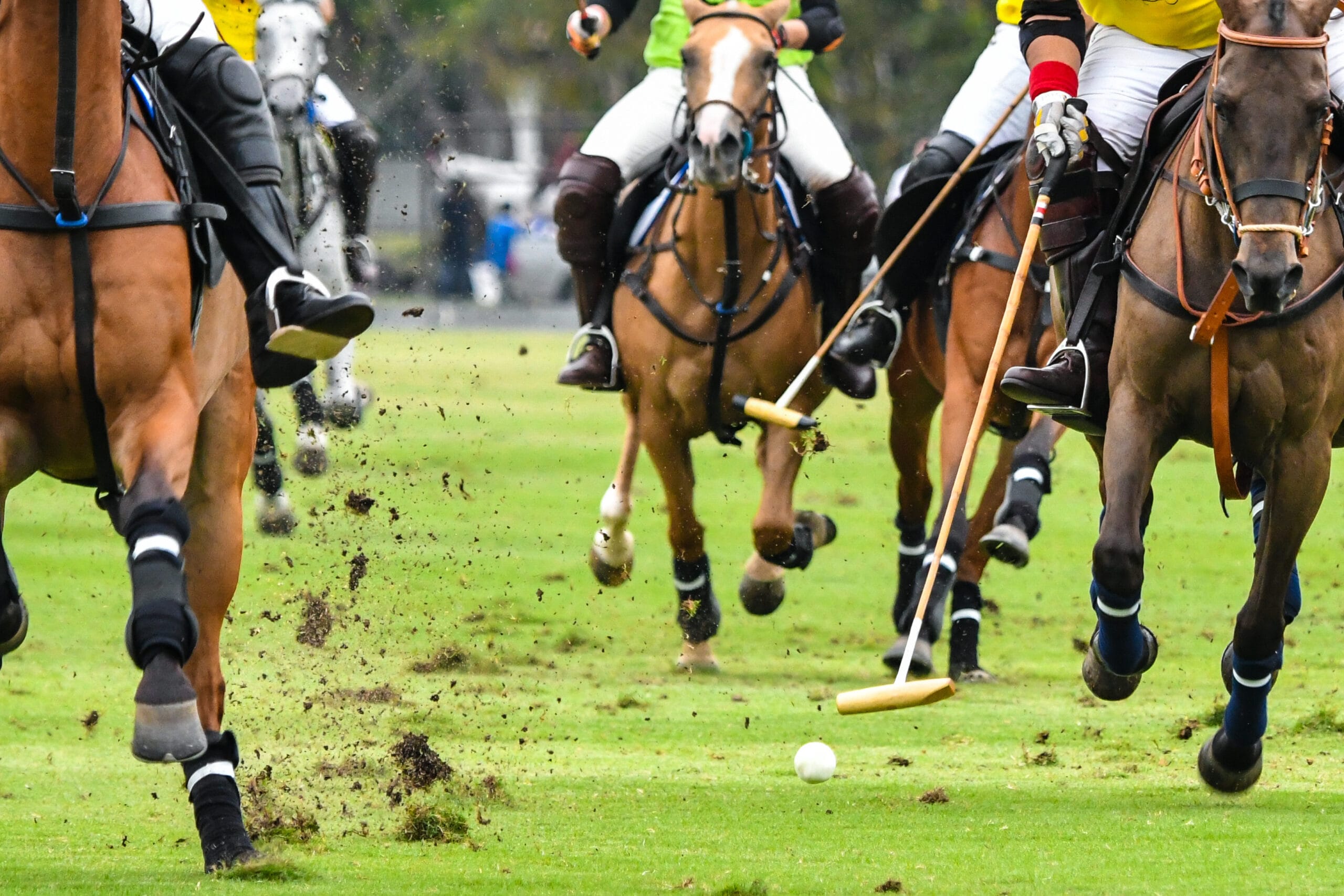
To the untrained eye, polo can appear chaotic: horses moving at speed, mallets swinging, the ball shifting direction in an instant. But beneath this lies a game of remarkable control and awareness.
Positioning matters. Timing matters. Restraint matters.
And, perhaps most interestingly, perception matters.
Polo has long been as much about how one carries oneself as how one plays. It is not a sport that rewards showmanship. Instead, it favours composure and an ability to act decisively without drawing unnecessary attention.
This is where polo begins to transcend sport and enter the realm of social language. It reflects a broader aristocratic ideal: that true distinction lies not in display, but in quiet confidence.
The Social Ritual of the Match
If the game itself is disciplined, the atmosphere surrounding it is no less considered.
Polo matches have historically served as gathering points for society; opportunities to host, to observe, and to connect. Picnics are laid out with care rather than excess. Attire is elegant but rarely ostentatious. Conversation flows easily, often punctuated by the rhythm of the match.
Even the well-known tradition of “divot stomping”, where spectators step onto the field to repair the turf between chukkas, carries a certain symbolism. Participation is gentle, collaborative, and unforced.
These rituals reinforce an important idea: that social life, at its most refined, is not about performance, but about presence.
Polo and the Modern Aristocracy
While polo remains associated with established aristocratic families, its modern participants reflect a broader definition of distinction.
Today’s players and spectators often include individuals who value heritage, craftsmanship, and a certain standard of living… not necessarily those seeking visibility or fame. In this sense, polo sits comfortably within what might be described as a modern aristocracy of taste.
It is telling that the sport has largely resisted the pressures of commercialisation that have transformed so many others. Its appeal remains selective, its culture largely intact.
To engage with polo, whether as a player or an observer, is to step into a world where tradition is not curated for effect but simply lived.
Style Without Excess
Few environments illustrate the concept of “quiet luxury” more clearly than a polo ground.
Clothing is chosen with intention: tailored jackets, well-cut trousers, polished boots. Colours tend toward the classic rather than the seasonal. Accessories are functional as much as aesthetic.
Nothing feels forced.
This approach to style mirrors the broader ethos of aristocratic life, where quality is prioritised over quantity, and where restraint is understood as a form of confidence rather than limitation.
It is an aesthetic that continues to resonate, particularly in a culture increasingly saturated with overt displays of wealth.
Heritage, Continuity, and Belonging
At its heart, polo is not simply about sport or society. It is about continuity.
Clubs are maintained across generations. Families return season after season. Traditions are upheld not because they must be, but because they carry meaning.
This sense of continuity is central to many aspects of Britain’s heritage, including the enduring appeal of manorial titles. Like polo, such titles are not defined by spectacle, but by their connection to history, land, and legacy. They represent a thread that can be held, appreciated, and passed forward.
For those drawn to this world, the attraction lies not in outward display, but in the quiet assurance of belonging to something that endures.
A Subtle Distinction
In an age that often equates status with visibility, polo offers a different perspective.
It reminds us that distinction does not need to announce itself. That tradition, when genuinely held, requires no embellishment. And that the most enduring forms of prestige are often those least loudly expressed.
Whether watched from the sidelines or understood more deeply, polo continues to embody a particular kind of elegance… one shaped by history, defined by restraint, and carried forward with quiet confidence.
If you see a manorial title that you feel enables you to tap into this world of quiet elegance, please feel free to contact us. We’d love to tell you more about the one that’s caught your eye.